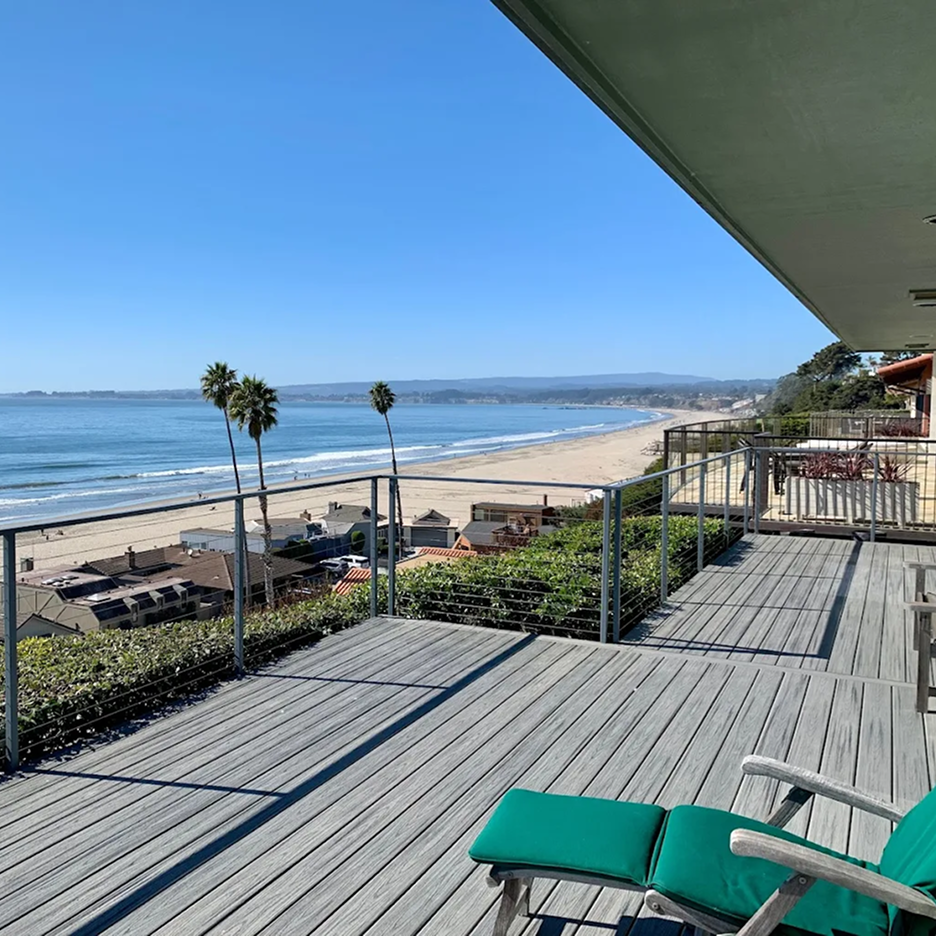
A beautiful deck is a cornerstone of the coastal California lifestyle, offering a private space to enjoy the stunning views and weather of the Monterey Bay area. But the marine fog, salt spray, and persistent moisture that define our coastline also create a challenging environment for wooden structures. Over time, these elements can compromise your deck’s safety and integrity.
For homeowners in Santa Cruz and Monterey, understanding the difference between simple cosmetic wear and serious structural decay is important. Recognizing the signs your deck needs replacing can protect your family and property from damage. This guide will help you perform a basic safety inspection and identify the red flags that signal it’s time for a replacement.
How the Coastal Environment Ages Your Deck
Living near the ocean means your deck is in a constant battle with the elements. Unlike inland structures, coastal decks face a combination of factors that accelerate wear on timber and hardware. The persistent marine layer brings dampness that seeps into wood, creating ideal conditions for rot and mildew.
Furthermore, the salty air is highly corrosive to metal. The screws, nails, bolts, and joist hangers that hold your deck together can rust and weaken much more quickly than in a drier climate. This combination of wood decay and hardware corrosion can undermine your deck’s structural soundness.
Critical Safety Red Flags Your Deck Needs Replacing
While you can address some deck issues with simple repairs, others point to deep-seated problems that a patch-up job won’t fix. Here are the most important warning signs that indicate a full deck replacement may be necessary.
Widespread Dry Rot or Spongy Wood
Dry rot is a type of fungal decay that destroys the structural integrity of wood, leaving it brittle and weak. To check for it, probe support posts, joists, and deck boards with a screwdriver. If the wood feels soft, spongy, or crumbles easily, you likely have rot.
While you can often replace a single rotted board, widespread rot is a different story. If you find rot in multiple areas, especially in support structures like posts or joists, the decay is likely more extensive than it appears. At this point, a simple dry rot repair is often not enough, and replacement is the safest option.
Corroded Joist Hangers and Fasteners
The metal hardware holding your deck together is as important as the wood. Closely inspect the metal joist hangers, screws, and bolts, particularly on the underside of the deck. Look for signs of rust, corrosion, or black streaks on the wood running from the fasteners.
Corroded hardware can no longer do its job and can fail under pressure. If you notice rust on the connectors holding your joists and beams, the deck is at risk of collapsing. This is a clear sign the deck is at the end of its safe life.
A Loose or Detached Ledger Board
The ledger board is the piece of lumber that attaches the deck to your house. It is the most critical component of the structure. A properly installed ledger board should be flush against the home with no gaps and protected by flashing to prevent water from getting behind it.
Check for any space between the ledger and your house. Look for loose or missing bolts, signs of water damage on your home’s siding, or any indication that the board is pulling away. A failing ledger board is an emergency situation, as it can lead to a complete deck collapse.
Wobbly Guardrails and Unstable Stairs
Guardrails and stairs are essential for safety. Lean firmly against your deck’s guardrails in several places. If you feel any significant wobble, sway, or looseness, you likely have rotted posts or failed connections. This is a major safety hazard, especially for elevated decks.
Similarly, walk up and down your stairs, paying attention to any movement or sponginess. Check the stair stringers (the diagonal boards that support the steps) for signs of rot or cracking where they meet the ground and the deck frame.
Cosmetic Issues vs. Structural Dangers
It’s important to distinguish between surface-level flaws and underlying structural problems. Effective coastal deck maintenance can solve many cosmetic issues, but it can’t fix a failing frame.
- Faded or peeling stain
- Minor splinters or surface cracks
- Surface-level mildew
- A single cracked deck board
- Widespread rot in posts, joists, or beams
- Heavily corroded metal hardware
- A loose ledger board
- Unstable, wobbly guardrails or stairs
When the foundation of your deck is weak, surface-level repairs are no longer a viable or safe solution. Investing in a new, properly constructed deck is the only way to ensure long-term safety and peace of mind.
Your Trusted Partner for Deck Replacement in Monterey, CA
A safe, beautiful deck is an investment in your home and lifestyle. If you’ve noticed any of the serious warning signs above, it’s time to take action. At Decks By DeCamp, we specialize in designing and building high-quality custom decks that can withstand our coastal California environment.
Our team understands the specific materials and construction techniques that homeowners need to build a new deck that’s not only beautiful but also durable and safe for years to come. As a professional custom deck builder in the Monterey Bay area, we work hard to provide homeowners with expert craftsmanship and reliable solutions. Don’t wait for a small problem to become a disaster. A professional deck safety inspection can give you a clear picture of your deck’s condition, and our team can provide a comprehensive evaluation.
For a professional deck inspection or to discuss a deck replacement in Monterey CA, Santa Cruz, or anywhere in the Monterey Bay region, contact Decks By DeCamp today.